Stranded on the Shoulder of the I-10? A Survival Guide to Roadside Assistance in Phoenix
A breakdown on I-10 can turn a normal drive through Avondale, Goodyear, or the West Valley into a dangerous situation within minutes. Traffic moves quickly, shoulders can be narrow, and Arizona heat can make even a short wait uncomfortable.
Knowing what to do before help arrives matters. This practical guide explains the first 10 minutes after a breakdown, how to decide between a tow and a mobile mechanic, and what to keep in your vehicle for roadside emergencies.
The first 10 minutes after your vehicle breaks down
Minutes 0–2: Get out of the traffic lanes
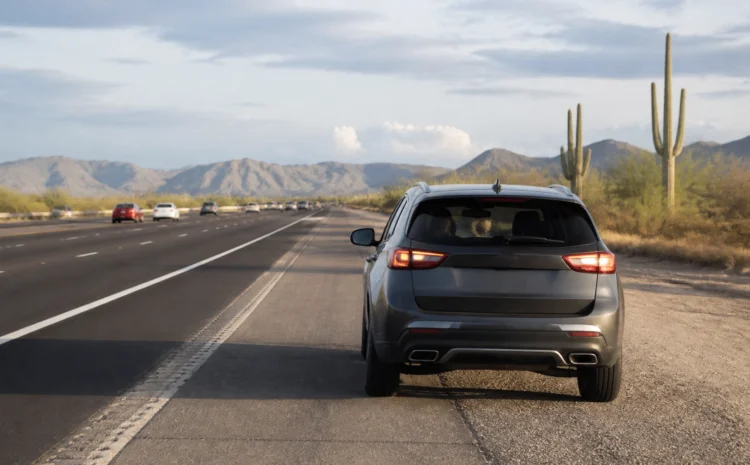
If your vehicle still moves, steer smoothly toward the right shoulder or the nearest safe exit. Your goal is to get completely out of the travel lanes. Avoid stopping in a gore area, which is the triangular space near an exit or entrance ramp.
If you cannot reach the shoulder, keep your seat belt fastened and turn on your hazard lights. Do not attempt to push the vehicle yourself, especially on I-10 or another busy Phoenix-area highway.
Once stopped:
- Set the parking brake.
- Turn the wheels away from traffic if you are on an incline.
- Turn off the engine unless you need air conditioning for heat safety.
- Keep your vehicle as far from moving traffic as possible.
- Raise the hood only if you can do so without stepping into danger.
The Arizona Department of Public Safety’s roadside motorist assistance guidance advises stranded motorists to move completely off the highway when possible and avoid walking along the roadway.
Minutes 2–5: Report your location
If you are stranded on the highway, call 911. This is especially important if your vehicle is in or near a travel lane, the shoulder is narrow, someone is injured, or your vehicle presents a hazard to other drivers.
Give the dispatcher clear information:
- I-10, I-17, Loop 101, Loop 202, or another roadway
- Eastbound or westbound direction
- Nearest exit, mile marker, or cross street
- Your vehicle’s make, model, and color
- Whether anyone is injured or exposed to extreme heat
- Whether the vehicle is fully on the shoulder
Look for an exit sign, overpass, business, or landmark. If you are traveling with someone else, have that person use a phone’s map application to share your location. Do not walk down the freeway to find a sign.
After contacting 911 when appropriate, call your roadside assistance provider or a local repair service. Response times vary with traffic, location, weather, and the number of active calls. A breakdown west of Loop 303 may take longer to reach than one closer to central Phoenix.
Minutes 5–10: Choose the safest place to wait
In ordinary clear-weather conditions, stay inside the vehicle with your seat belt fastened if you are close to active traffic. A vehicle provides more protection than standing beside it, and Arizona DPS specifically warns against walking along the highway.
If your vehicle is completely off the roadway, there is a wide shoulder, and traffic is well separated, you may exit from the passenger side and move behind a guardrail. Keep children and pets away from the pavement. Never stand between your vehicle and moving traffic.
Extreme heat changes the decision. If the interior becomes dangerously hot, move everyone: including pets: away from the travel lanes and toward shade only when you can do so safely. Call 911 if anyone develops confusion, weakness, nausea, collapse, or other signs of serious heat illness.
For current road conditions, closures, and traffic information, use Arizona 511 or the AZ511 app. Do not use a phone while driving, but a passenger can check conditions while you remain safely stopped.
What to do during an Arizona dust storm
A dust storm requires different lighting and positioning. If you can safely exit the highway before visibility drops, do so. If a dust storm reaches you while driving, follow ADOT’s “Pull Aside, Stay Alive” guidance.
Pull completely off the paved portion of the roadway. Do not stop in a travel lane or remain partly on the shoulder if you can safely move farther away. Set the emergency brake, turn off all vehicle lights: including hazard flashers: and keep your seat belt fastened.
Turning off the lights helps prevent approaching drivers from following them toward your stopped vehicle in near-zero visibility. Stay inside until conditions improve unless the vehicle becomes unsafe because of fire, a crash, or extreme heat.
Do you need a tow or a mobile mechanic?
The right type of help depends on what failed and where your vehicle is located. A mobile mechanic may be able to get you moving without a tow, but some problems require transport to a fully equipped shop.
A mobile mechanic may be the better first call when:
- Your battery is dead and the vehicle needs a jump or battery replacement
- You have a flat tire and a usable spare
- The starter is suspected and the vehicle is safely accessible
- A minor electrical issue prevents the vehicle from starting
- You need basic troubleshooting or a preliminary inspection
- A warning light appeared, but the vehicle is safely parked and not showing severe symptoms
A mobile technician can inspect the vehicle where it sits, perform certain repairs on-site, and help determine whether driving is safe. For example, a no-start condition may come from the battery, starter, alternator, wiring, or another component. Testing the system is more useful than repeatedly turning the key and hoping the problem disappears.
A tow is usually safer when:
- The vehicle cannot move under its own power
- The engine is knocking, overheating, smoking, or leaking heavily
- The transmission will not engage
- The steering or brakes do not feel safe
- A tire, wheel, or suspension component is damaged
- The vehicle is in a dangerous position or on a narrow shoulder
- You do not have a safe place for roadside work
- The required repair needs a lift, specialized equipment, or extensive disassembly
Do not ask a mechanic to work in an unsafe location simply to avoid a tow. Your safety comes first. If you are close to traffic, on a bridge, near an entrance ramp, or exposed to severe weather, a tow to a safer location may be the right choice even if the repair itself is minor.
What Mobile Man Auto Repair can do
Mobile Man Auto Repair combines a fully equipped shop in Avondale with mobile assistance throughout the West Valley. That gives you options after a breakdown: a technician may be able to address a smaller issue at your location, or your vehicle can be taken to the shop when it needs more involved service.
The team handles repairs and maintenance for all makes and models, including cars, trucks, heavy-duty vehicles, and fleet vehicles. Roadside-related services may include help with no-start conditions, flat tires, minor diagnostics, and other problems that can be safely addressed outside the shop. Availability can depend on your location, the vehicle, the repair, and current scheduling.
You can learn more about Mobile Man’s automotive repair services or contact the shop to discuss your situation. The shop is located at 519 W. Western Ave. in Avondale and lists hours of Monday through Friday from 8:00 a.m. to 5:00 p.m. and Saturday from 8:00 a.m. to 2:00 p.m. Call 623-936-5580 for assistance and to confirm service availability.
Mobile Man is family-owned, has served the Valley since 1999, speaks Spanish, and provides a 12-month warranty on its work. Those details matter when you are trying to make a clear decision during a stressful roadside stop.
Build an emergency kit for Phoenix driving
A roadside kit should help you stay visible, hydrated, and connected. Store it where you can reach it without unloading the entire vehicle.
Include:
- Several liters of drinking water per person
- Electrolyte drinks or packets
- A phone charger and charged power bank
- Reflective warning triangles
- A high-visibility vest
- Flashlight with spare batteries
- First-aid supplies
- Work gloves
- Tire pressure gauge and portable inflator
- Jumper cables or a charged jump pack
- Basic tools appropriate for your vehicle
- Sunscreen, a hat, and lightweight long-sleeve clothing
- Emergency blankets or a shade tarp
- Printed insurance and roadside assistance information
Water is the priority in the Arizona heat. Replace stored water regularly, and check your jump pack and batteries before long trips. If you carry a spare tire, verify its pressure rather than assuming it is ready to use.
For heavy-duty trucks and fleet vehicles, add warning triangles and equipment required by your company’s safety policy. Drivers should also know the vehicle’s length, weight, and clearance needs when speaking with a tow provider.
A simple I-10 breakdown checklist
Save these steps in your phone:
- Move completely off the highway if the vehicle can still travel.
- Turn on hazards and set the parking brake.
- Stay belted if you are close to traffic.
- Call 911 if you are stranded or in a dangerous position.
- Share the highway direction, nearest exit, and exact location.
- Do not walk along I-10 or attempt repairs in a live lane.
- Contact your roadside provider or a local mobile mechanic.
- Use water, shade, and your emergency kit while you wait.
- Follow different lighting instructions during a dust storm.
- Tow the vehicle when driving or roadside repair would be unsafe.
Stay calm, get clear of traffic, and call for the right help
A breakdown on I-10 is stressful, but a safety-first response can reduce the risk. Move away from traffic, report your location, protect yourself from the heat, and avoid guessing when the vehicle is not safe to drive.
For drivers in Avondale and throughout the West Valley, Mobile Man Auto Repair offers the convenience of mobile assistance backed by a local in-shop repair facility. When you need roadside assistance in Phoenix, call 623-936-5580 or reach out to Mobile Man Auto Repair to discuss the safest next step.