7 Brake Mistakes to Avoid Before the Monsoon Hits
We all know the feeling. One minute it’s 110 degrees and bone-dry in Avondale, and the next, the sky turns purple, the wind picks up, and a wall of rain slams into your windshield. Monsoon season in the West Valley is no joke. While most people are busy checking their windshield wipers or making sure their AC is blowing cold, there is one critical system that often gets ignored until the first major downpour: your brakes.
When the roads transition from dusty and hot to slick and flooded in a matter of seconds, your stopping distance changes drastically. If your braking system isn’t 100% ready, you’re not just looking at a potential repair bill: you’re looking at a safety hazard.
At Mobile Man Auto Repair, we’ve seen it all during the summer months. To help you stay safe, we’ve put together the seven biggest mistakes drivers make with their brakes before the storms arrive.
1. Ignoring the “Monsoon Squeak”
We’ve all heard it: that high-pitched chirp when you tap the pedal. In the dry heat of June, you might be tempted to ignore it, thinking it’s just a bit of Arizona dust in the drums. But that sound is usually your brake wear indicator doing exactly what it was designed to do.
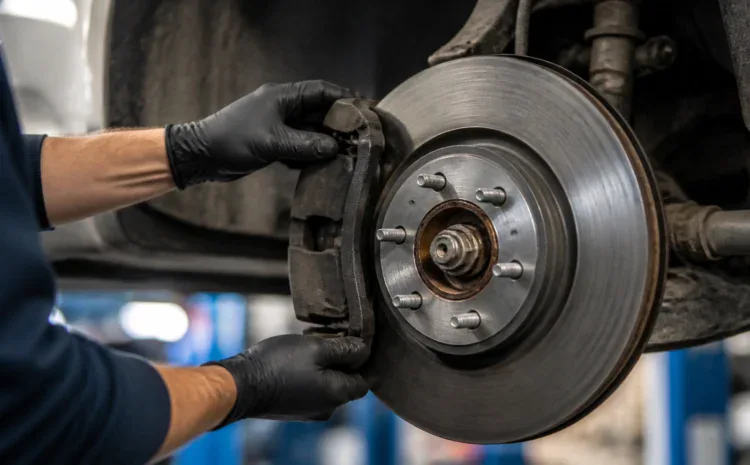
It’s telling you that your pads are getting thin. When the rain hits, thin pads lose their effectiveness much faster than healthy ones. Wet rotors require more friction to grab, and if you’re already running on “low,” your stopping distance is going to skyrocket when you’re trying to navigate a flooded intersection in Phoenix. If you hear a squeak, it’s time for a professional brake repair in Avondale, AZ, before the clouds roll in.
2. Thinking Your Brake Fluid is “Fine”
Brake fluid is one of the most misunderstood parts of your car. It is “hygroscopic,” which is just a fancy way of saying it acts like a sponge for moisture. Even in our desert climate, humidity spikes during the monsoon. When moisture gets into your brake fluid, it lowers the boiling point.
During a heavy storm, you might find yourself riding the brakes more than usual or stopping suddenly. This creates heat. If your fluid is contaminated with water, it can actually boil, creating air bubbles in the lines. This leads to a “spongy” pedal feel where you push the brake and… nothing happens for a second. That is the last thing you want when traffic suddenly stops on the I-10.
3. Forgetting that Dust is the Enemy
In the West Valley, we deal with “haboobs” and constant dust. This fine silt gets everywhere, including inside your brake assemblies. It acts like sandpaper, wearing down your pads and rotors prematurely.
When that dust meets the first rain of the monsoon, it turns into a thin layer of “mud” on your braking surfaces. If your brakes haven’t been cleaned or serviced recently, this sludge can cause your brakes to grab unevenly or slip. A quick check from a mobile mechanic in Phoenix can ensure your calipers are lubricated and your system is clear of the desert’s grit.
4. Only Replacing One Side
We get it: auto repairs can be an unexpected expense. Sometimes folks ask if they can just replace the pads on the side that’s “making the noise.” This is a massive mistake, especially for wet-weather driving.
Braking needs to be symmetrical. If your left front brake has brand-new pads and your right front is halfway worn, your car will likely pull to one side when you hit the brakes hard on a wet road. In a monsoon, where traction is already limited, this can send you into a spin. Always replace pads and resurface rotors in pairs across the same axle.

5. Trusting the “Wait and See” Method
Many drivers wait until they feel a vibration (pulsation) in the pedal before they think about their rotors. That vibration usually means your rotors are warped or have uneven “pad transfer.”
In dry weather, a slight vibration is annoying. In the rain, it’s dangerous. Warped rotors don’t make full contact with the pads, which means you won’t have the full stopping power you need when hydroplaning becomes a risk. If your steering wheel shakes when you slow down, don’t wait for the first storm to see if it gets worse. It will.
6. Overlooking Your Tires’ Role in Braking
You might think your brakes stop your car, but technically, your brakes stop your wheels. It’s your tires that stop the car. If you have worn-out tread, even the most expensive ceramic brakes in the world won’t keep you from sliding on a wet Avondale road.
Before the monsoon hits, check your tread depth. If your tires are “bald” or have uneven wear, they can’t channel water away. This leads to hydroplaning, where your car literally floats on a thin layer of water. When that happens, it doesn’t matter how hard you hit the brakes: you’re just a passenger until the tires find grip again.
7. Assuming “ABS” Solves Everything
Modern cars have incredible safety tech, like Anti-lock Braking Systems (ABS). But ABS is not a magic wand; it’s a system that pumps your brakes faster than a human can to prevent the wheels from locking up.
If your actual mechanical parts: the pads, rotors, and fluid: are in bad shape, the ABS has to work twice as hard to do its job. We’ve seen cases where neglected hardware caused the ABS pump to work overtime, leading to much longer stopping distances than the driver expected. Tech is great, but it relies on solid hardware to keep you safe.
Preparing for the Storm
The Arizona monsoon is beautiful, but it demands respect. You shouldn’t have to worry if your car is going to stop when you need it to. Taking twenty minutes to have a professional look at your braking system now can save you hours of headache (and a lot of money) later this summer.
Whether you’re commuting to Phoenix or running errands in Avondale, your safety depends on those four corners of your vehicle working perfectly. Don’t wait for the clouds to turn gray to start thinking about your maintenance.
Let Us Come to You
At Mobile Man Auto Repair, we know you’re busy. You don’t always have time to drop your car off at a shop and wait in a lobby. That’s why we bring the shop to you. From routine general maintenance to complex brake repairs, our mobile units are fully equipped to handle your vehicle’s needs right in your driveway or at your office.
We’ve been serving the Valley since 1999, and with over 35 years of experience, we know exactly what Arizona summers do to your car. We offer fair, honest pricing and a 12-month warranty on our work to give you peace of mind.
Is your car ready for the monsoon? Give us a call at (623) 931-5417 or visit our contact page to schedule your pre-storm brake inspection today. Let’s make sure you’re ready for whatever the sky throws at us!