5 Signs Your Brakes Need Professional Attention Before Your Next Road Trip
There is nothing quite like the feeling of packing up the car, setting your favorite playlist, and heading out for a long-awaited road trip. Whether you are planning a scenic drive up to Sedona or a cross-country haul to visit family, your vehicle needs to be in top shape to handle the miles ahead. While most people remember to check their oil or fill up the gas tank, the most critical safety system often gets overlooked until there is a problem: your brakes.
When you are cruising down the I-10 at highway speeds, you need to know that your car will stop exactly when and where you want it to. A small brake issue in the city can quickly turn into a major safety hazard during long-distance driving or in the steep grades of northern Arizona. Taking the time to look for warning signs before you leave can save you from a stressful breakdown or, worse, an accident.
If you are prepping for a journey, keep an eye: and an ear: out for these five signs that it’s time to schedule professional brake repair in Avondale, AZ before you hit the road.
1. High-Pitched Squealing or Screeching Noises
One of the most common early warning signs of worn brakes is a high-pitched squeal that occurs when you apply the pressure to the pedal. Most modern brake pads are designed with a small metal shim called a “wear indicator.” When the friction material on the pad wears down to a certain point, this shim makes contact with the rotor, creating that unmistakable screeching sound.
This sound isn’t just annoying; it is your car’s way of telling you that the pads are nearing the end of their life. If you ignore this sound, you’re essentially running on borrowed time. On a long road trip, where you might be braking more frequently due to traffic or mountain descents, those thin pads can disappear faster than you’d expect.
Getting a professional to look at your pads now ensures you have plenty of “meat” left on them for the miles ahead. If you’re busy packing and don’t have time to drop the car off, searching for a reliable mobile mechanic near me can be a lifesaver. Having a technician come to your home to swap out those pads means you can keep focusing on your trip preparations while your car gets the attention it needs.
2. A Harsh Grinding Sound
If the squealing has transitioned into a deep, metallic grinding noise, you’ve moved past the warning stage and into the danger zone. This sound usually means the brake pad material has completely worn away, leaving the metal backing plate to press directly against the iron brake rotor.
Grinding is a “stop driving” kind of sound. Not only does metal-on-metal contact significantly reduce your stopping power, but it also generates extreme heat that can warp or crack your rotors. Instead of a simple pad replacement, you’re now looking at a more expensive repair involving new rotors and potentially even new calipers.
Before you head out on a trip, you want your braking system to be as smooth as possible. Grinding indicates a loss of structural integrity in your brakes, which is the last thing you want when navigating unfamiliar roads. If you hear this, it’s vital to visit a shop for auto repair in Avondale, AZ immediately to prevent further damage to your vehicle’s underside and safety systems.
3. Shaking or Vibrating During Braking
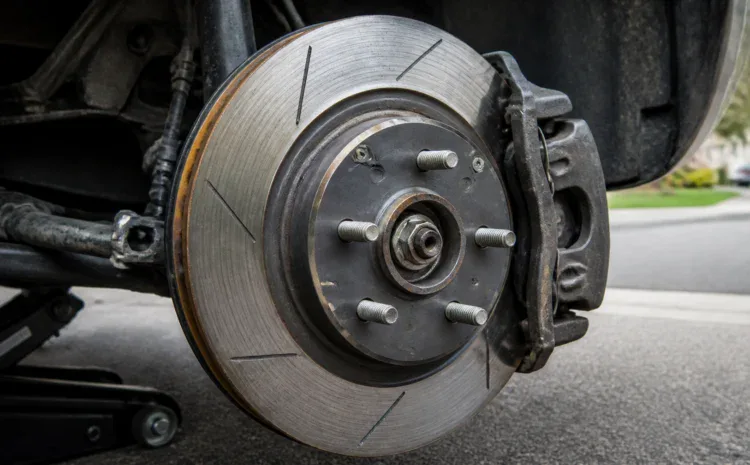
Have you ever pressed the brake pedal and felt a rhythmic pulsing under your foot, or noticed the steering wheel shaking as you slow down? This is often a sign of warped rotors. Rotors are the large metal discs that your brake pads grip to slow the car down. Over time, the intense heat generated by braking can cause these discs to develop thin spots or lose their flat shape.
When the pads press against an uneven surface, they bounce, which sends those vibrations back through the pedal and steering column. While this might feel like a minor annoyance during a quick trip to the grocery store, it can be dangerous at higher speeds. Warped rotors increase your stopping distance and can make it harder to maintain control of the vehicle during an emergency stop.
Our team at Mobile Man Auto Repair frequently sees this in vehicles that have been driven through the Arizona heat or used for towing. Getting your rotors “turned” (resurfaced) or replaced ensures a smooth, predictable stop every single time you hit the pedal.

4. A “Spongy” or Soft Brake Pedal
The feel of your brake pedal should be firm and consistent. If you notice that the pedal feels soft, “mushy,” or travels much closer to the floor than usual before the brakes engage, you likely have a hydraulic issue. This could be caused by air in the brake lines, a failing master cylinder, or a brake fluid leak.
Brake fluid is the lifeblood of your stopping system. It is a non-compressible liquid that transfers the force of your foot on the pedal to the calipers at the wheels. If there is a leak or if the fluid has absorbed moisture over time, that pressure won’t be transferred effectively. A spongy pedal is a precursor to total brake failure, which is a nightmare scenario on a highway.
Checking your fluid levels is a good start, but a soft pedal always requires a professional diagnosis. Because we offer both a physical shop and mobile assistance, we can help you address these issues wherever you are in the West Valley. If you are worried about your pedal feel, don’t risk a long drive; get it checked out by a pro who understands the complexities of hydraulic systems.
5. The Vehicle Pulls to One Side
When you apply the brakes, your car should continue to travel in a straight line. If you feel the vehicle “tugging” or pulling to the left or right when you slow down, something is uneven in your braking system. This is often caused by a “stuck” brake caliper.
Inside the caliper is a piston that moves the brake pad. If that piston gets stuck due to corrosion or debris, the pads on one side of the car may be applying more pressure than the other. This pulling can also be caused by a collapsed brake hose that is restricting fluid flow to one wheel.
Driving a car that pulls to one side is exhausting on a long road trip because you are constantly fighting the steering wheel to stay in your lane. More importantly, it can cause uneven tire wear and make the car unpredictable in wet or slippery conditions. A quick inspection of your calipers and hoses can ensure your car stays balanced and easy to handle throughout your journey.
Why Professional Pre-Trip Maintenance Matters
It can be tempting to try a DIY fix or just “see how it goes” on the trip, but brakes are one area where you should never cut corners. Modern braking systems are integrated with Anti-lock Braking Systems (ABS) and traction control, requiring specialized tools and knowledge to service correctly.
At Mobile Man Auto Repair, we have been serving the Valley since 1999. Our 35+ years of experience mean we’ve seen every possible brake issue, from simple pad replacements to complex hydraulic overhauls. We know that convenience is key when you’re preparing for travel, which is why we offer the unique flexibility of bringing the shop to you.
Whether you need a full inspection at our Avondale location or want us to perform a routine check in your driveway, we make it easy to get your car road-trip ready. We work on all makes and models, and our bilingual team is always ready to explain exactly what your car needs in plain English or Spanish.
Conclusion
Your brakes are the most important safety feature on your vehicle. Before you load up the trunk and head out on your next adventure, take a few minutes to listen to your car and feel how it responds to your inputs. Catching a squeal or a slight vibration now can prevent a major headache later.
Don’t let brake trouble ruin your vacation. Whether you prefer to visit us at our fully-equipped shop or need the convenience of a mobile technician, we are here to help. Reach out to Mobile Man Auto Repair today to schedule an inspection and ensure your family stays safe on the road.
Ready for your road trip? Contact Mobile Man Auto Repair today to schedule your brake service and enjoy peace of mind on every mile!